 blog
blog
5 Best Cabinet Paint Colors for Kitchens
Table of Contents
- How to Choose the Right Cabinet Paint Color for Your Kitchen
- 1. Warm White: The Most Popular Cabinet Paint Color Right Now
- 2. Sage Green: A Calming Color for Coastal Kitchens
- 3. Navy Blue: Bold Contrast That Hides Everyday Wear
- 4. Greige: The Neutral That Works With Warm and Cool Tones
- 5. Soft Black: A Modern Statement That Still Feels Warm
- The Best Paint Finish for Kitchen Cabinets
- What Kitchen Cabinet Painting Cost Depends On
- Frequently Asked Questions
Last Updated: October 2, 2026
How to Choose the Right Cabinet Paint Color for Your Kitchen
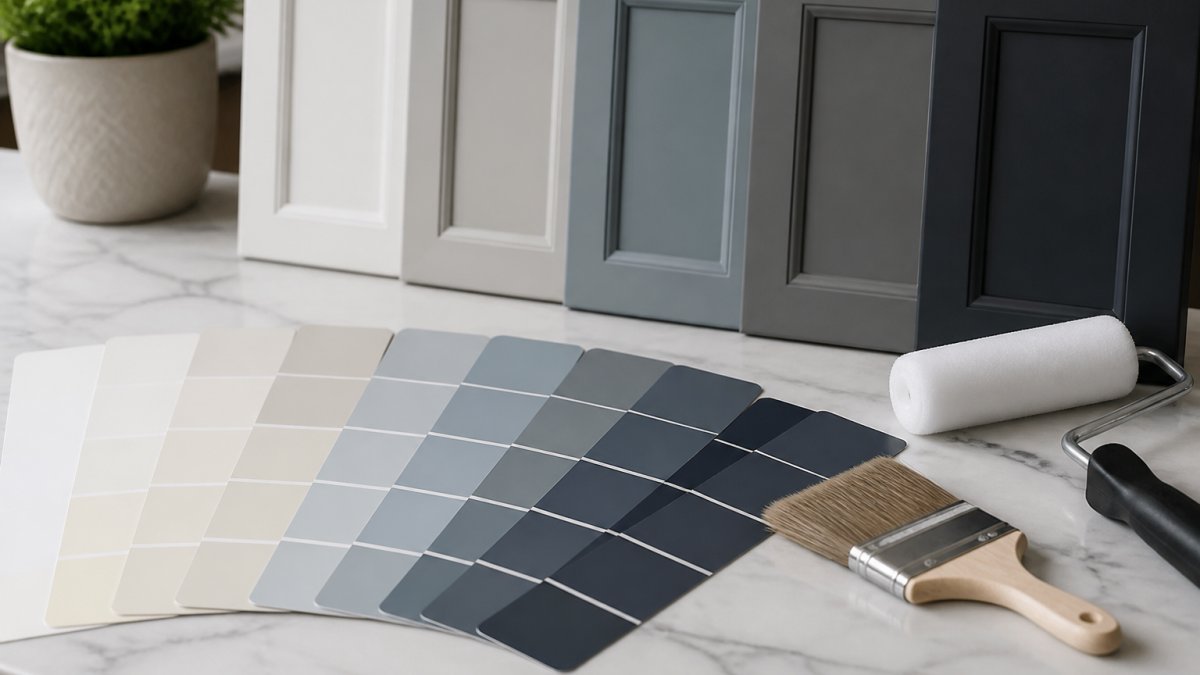
Choosing cabinet paint colors is the process of matching a shade to your kitchen's fixed elements: lighting, cabinet door style, and countertop tone. Get those three right, and almost any color works. Get them wrong, and even an expensive paint job looks off. This guide covers popular shades, plus the finish and prep details that decide how long the job lasts.
Here's the part most guides skip: the color matters less than the light hitting it. A north-facing kitchen can make the same white read gray by mid-afternoon.
Lighting, Cabinet Style, and Countertop Pairing
Start with light direction, because it changes everything else. North-facing rooms pull cool and blue; south-facing rooms wash warm and yellow. Test any color on a cabinet door in the actual room before committing.
Cabinet style sets the mood. Shaker doors suit mid-tone and deep colors. Flat slab fronts handle bold shades better. Raised panels look best in traditional whites and creams.
Countertops are your anchor. Warm counters (beige, cream, gold-veined stone) pair with warm whites and greige. Cool counters (white marble, gray quartz) open the door to navy and soft black.
1. Warm White: The Most Popular Cabinet Paint Color Right Now
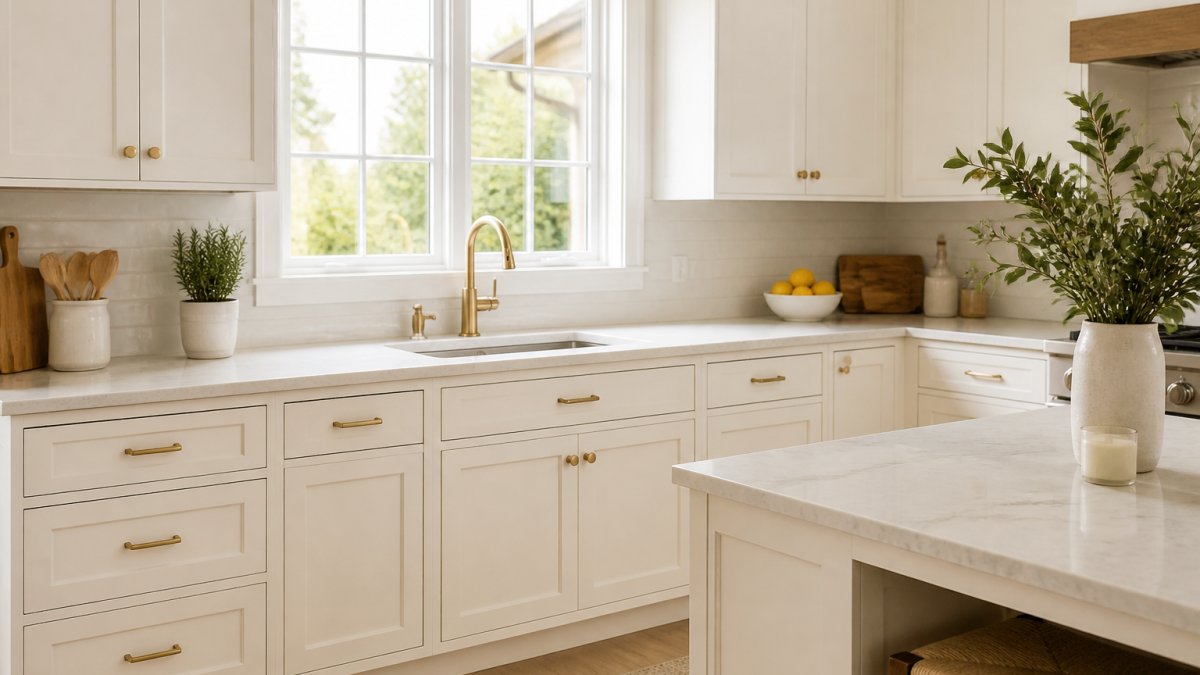
Warm white is the safest cabinet paint color for kitchens, and it's the one we mix most often. It reads clean without the sterile chill of a bright white. The undertone leans cream or ivory, so it flatters wood floors and brass hardware.
The aesthetic: airy, timeless, and easy to live with. It makes small kitchens feel larger and never fights your countertops.
Pair warm white with:
- Brass or bronze hardware for a classic look
- Matte black pulls for contrast
- Wood or butcher-block counters to add warmth
Look for warm white shades at your local paint supplier. Bring a door to the store and compare chips under the shop lights, then again at home.
2. Sage Green: A Calming Color for Coastal Kitchens
Sage green is a muted, gray-green shade that brings a soft, natural feel to a kitchen. It's a favorite in coastal homes because it echoes sea grass and driftwood without shouting. The color calms a busy space and pairs beautifully with white counters.
The aesthetic: relaxed, organic, and slightly vintage. It works on both upper and lower cabinets.
Sage suits kitchens with plenty of natural light. In a dark room it can turn muddy, so test it carefully. Pair it with warm white uppers for a two-tone look, or keep it on the island only.
Hardware choices: brushed nickel, unlacquered brass, or matte black all work. Avoid chrome, which can make sage look cold.
3. Navy Blue: Bold Contrast That Hides Everyday Wear
Navy blue is a deep, saturated shade that creates strong contrast against white walls and counters. It's the practical pick for busy families because darker cabinets show fewer fingerprints and scuffs than white ones.
The aesthetic: confident and slightly formal, but warm when paired with gold or brass accents. Navy works on full runs or as a lower-cabinet-only color under white uppers.
One caution: navy absorbs light. In a small or dim kitchen, keep it to the island or base cabinets. Test it in your space first.
4. Greige: The Neutral That Works With Warm and Cool Tones
Greige is a blend of gray and beige that sits between warm and cool. That middle ground is why it pairs with almost any countertop, floor, or backsplash. It's the most flexible option on this list.
The aesthetic: modern, soft, and understated. It won't date quickly because it doesn't commit hard to either temperature.
Greige is forgiving in rooms with mixed lighting. If your kitchen gets cool morning light and warm evening light, greige holds up better than a pure gray or pure cream. Pair it with white counters and black or brass hardware.
5. Soft Black: A Modern Statement That Still Feels Warm
Soft black is a near-black shade with a hint of warmth, not a flat, inky black. It delivers drama without feeling cold. It's the pick for homeowners who want a designed, high-contrast kitchen.
The aesthetic: modern, moody, and elegant. Soft black cabinets against white counters and light floors look intentional and expensive.
It hides wear well, which makes it practical for families. The trade-off is light: soft black soaks it up, so it suits larger kitchens or rooms with strong windows. Pair with brass, copper, or warm wood to keep it from feeling heavy.
| Color | Best For | Pairs With | Watch Out For |
|---|---|---|---|
| Warm White | Small or dark kitchens | Brass, wood counters | Cool undertones in shade |
| Sage Green | Coastal, bright rooms | White counters, nickel | Turns muddy in low light |
| Navy Blue | Busy family kitchens | Gold, white walls | Absorbs light in small rooms |
| Greige | Mixed lighting | Almost anything | Can read flat without contrast |
| Soft Black | Large, light-filled kitchens | Brass, light floors | Soaks up light |
The Best Paint Finish for Kitchen Cabinets
The best paint finish for kitchen cabinets is satin or semi-gloss. Both stand up to wiping, resist moisture, and clean easily, which matters in a room with steam, grease, and constant handling.
Here's the trade-off. Satin hides brush marks and looks softer. Semi-gloss is tougher and reflects more light, but it shows imperfections in the door surface. For most kitchens, satin on the doors and semi-gloss on the frames is a smart split.
Finish matters as much as color for durability. A quality finish depends on prep, not just the paint can. According to the EPA's guidance on lead-safe renovation, homes built before 1978 need lead-safe work practices before any sanding or scraping, so always confirm the age of your home first.
What Kitchen Cabinet Painting Cost Depends On
Kitchen cabinet painting cost depends on cabinet count, door style, condition, and prep work, not on a flat rate. Two kitchens of the same size can land far apart once you factor in repairs, priming, and the number of coats.
The biggest cost drivers:
- Number of doors and drawers. More boxes mean more labor.
- Door style. Raised panels and detailed profiles take longer than flat fronts.
- Condition. Grease buildup, peeling, and dents add prep time.
- Finish and coats. Deeper colors often need extra coats for even coverage.
- On-site vs. off-site spraying. Removing doors to spray gives a smoother result but adds handling time.
At Florence Painting Aloha, we walk through each of these before quoting, so the number you get reflects your actual kitchen. Our process starts with thorough cleaning and surface prep, because that's what keeps paint from chipping later. We back every job with a satisfaction guarantee: we will fix it if you are not completely satisfied.
Frequently Asked Questions
What is the most popular color for kitchen cabinets right now?
Warm white holds the top spot for cabinet paint colors because it brightens a kitchen without the harsh, sterile look of pure white. It pairs with nearly any countertop and hardware finish. Sage green and greige have gained ground as homeowners look for something with more personality. If resale matters to you, warm white and greige are the safest picks because they appeal to the widest range of buyers.
Which paint finish is best for kitchen cabinets?
Satin or semi-gloss is the best paint finish for kitchen cabinets. Both stand up to grease, steam, and frequent wiping, and they resist stains better than flat or matte finishes. Semi-gloss gives the most durable, easy-clean surface, while satin offers a softer sheen that still cleans well. Whichever you pick, the prep work and primer matter as much as the finish coat for long-term durability.
Do light or dark cabinets make a kitchen look bigger?
Light cabinets generally make a kitchen feel larger because they reflect more light and blur the visual boundary between cabinets and walls. Dark cabinets can make a space feel cozier but may shrink a small kitchen, especially one with limited natural light. If you want dark cabinets in a smaller kitchen, use them on a lower run or island and keep the upper cabinets light to balance the room.
How do I prep kitchen cabinets for painting?
Remove doors and hardware, then clean every surface with a degreaser to strip cooking residue. Sand lightly to dull the finish, fill any dents or cracks, and wipe away dust. Apply a bonding primer made for cabinets, then sand lightly again before painting. Skipping the degreasing or primer step is the most common reason cabinet paint chips early, so do not rush this stage.
Most homeowners underestimate how much prep decides the outcome. Color gets the attention, but bonding, priming, and a proper finish are what keep cabinets looking new for years. Florence Painting Aloha handles the full job, from surface preparation and cabinet painting to trim work and stucco repair, with transparent pricing and a satisfaction guarantee on every project. Schedule a bid with Florence Painting Aloha and get cabinets that hold up.