 blog
blog
Stucco Repair vs Replacement for Coastal Homes
Table of Contents
- How Salt Air and Coastal Weather Attack Stucco
- Signs Stucco Needs Repair: What Coastal Homeowners Should Watch For
- Stucco Water Damage: When Moisture Gets Behind the Wall
- Repair vs. Replacement: A Decision Framework for Coastal Homes
- Stucco Repair Cost vs. Replacement Cost: A Lifecycle Comparison
- Coastal Stucco Maintenance: Protecting Your Investment Year-Round
- Permits, Insurance, and Contractor Questions for Coastal Stucco Work
- Frequently Asked Questions
Last Updated: October 7, 2026
How Salt Air and Coastal Weather Attack Stucco
Salt air, coastal humidity, and wind-driven rain break down stucco faster than almost anything else. That combination is why stucco repair vs replacement for coastal homes is a decision most coastal owners face far sooner than they expect.
Stucco is a cement-based exterior finish applied over a substrate, usually wood sheathing or masonry, with a water-resistive barrier and metal lath in between. Each layer has a job. Salt and moisture attack all of them at once.
Why Coastal Homes Face More Stucco Damage
Three forces do most of the damage:
- Salt air leaves deposits that hold moisture against the surface.
- Coastal humidity slows drying, so walls stay damp longer.
- Wind-driven rain pushes water into cracks that gravity alone would never reach.
Together, they shorten the service life of any exterior cladding. Fiber cement siding and wood siding face similar pressure, but stucco hides its damage longer.
Signs Stucco Needs Repair: What Coastal Homeowners Should Watch For
The clearest signs stucco needs repair are cracks that keep returning, soft or hollow-sounding spots, staining, and stucco that pulls away from the wall. One or two of these usually means a surface issue. Several together point to water already inside the wall.
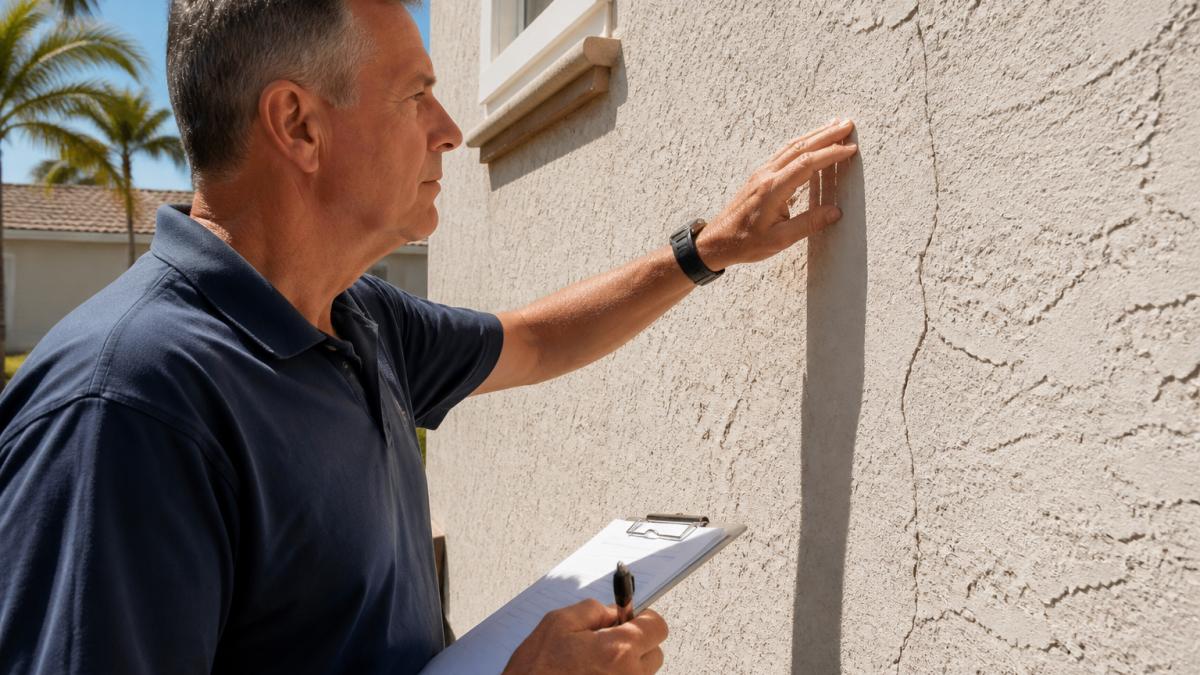
Walk your walls after a heavy rain and look for:
- Hairline cracks that reappear after patching
- Dark streaks or efflorescence, a white mineral residue
- Bubbling or blistering paint
- Stucco that sounds hollow when tapped
- Rust stains near weep screeds and flashing
Cosmetic Cracks vs. Structural Cracks
Hairline cracks are thin, stable, and mostly a moisture entry risk. Structural cracks are wider, longer, or moving, and they signal a problem with the substrate or the building envelope behind the finish.
A simple test: mark a crack with a pencil line and check it in 30 days. If it has grown, it is structural, and patching alone will not hold.
Stucco Water Damage: When Moisture Gets Behind the Wall
Stucco water damage happens when moisture intrusion gets past the finish and into the drainage plane. Once water sits behind the wall, the damage moves to the substrate, lath, and framing, and the visible stucco becomes the least of your problems.
Watch for these red flags:
- Musty smells inside the home
- Paint that peels in sheets
- Soft framing around windows and doors
- Repeated cracking in the same area
This is the point where surface patching stops working. Water management, not cosmetics, becomes the job.
Repair vs. Replacement: A Decision Framework for Coastal Homes
Most coastal homeowners are really choosing between four scopes, not two. Naming the scope first is what keeps you from paying for the wrong one.
- Finish patch: Cosmetic repair of the stucco coat only. No water-management work.
- Localized repair: Patch plus crack sealing and re-flashing at one area, such as around a window.
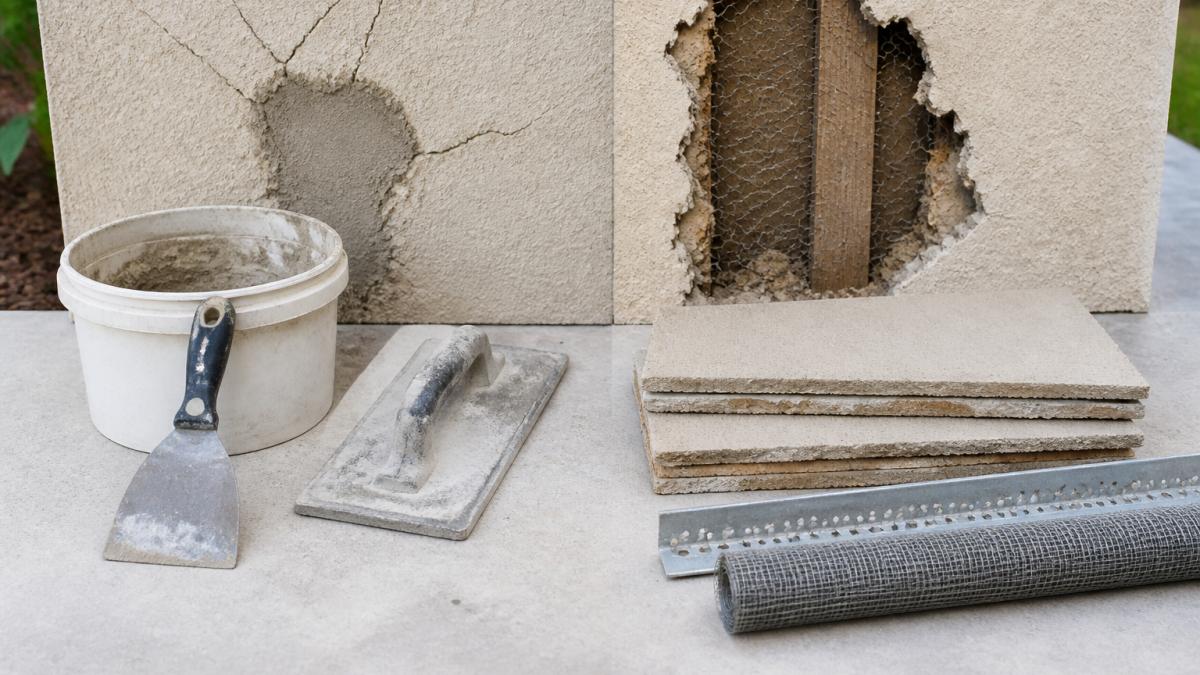
- Remediation: Removal of the damaged stucco and repair of the layers behind it, water-resistive barrier (WRB), lath, flashing, and weep screed, while leaving sound stucco in place.
- Full replacement: Tear-off of all stucco and lath down to the sheathing, then a new WRB, lath, scratch and brown coats, and finish.
A patch fixes a look. Remediation and replacement fix a wall.
Start With Symptoms, Not Square Footage
Work through these questions in order. The first "yes" usually sets your scope.
- Is the damage confined to one area, with sound stucco around it? Localized repair is likely enough.
- Do cracks return in the same spot after patching? The movement or moisture source is still active. Move to remediation.
- Do you see staining, efflorescence, or hollow-sounding stucco? Water is already behind the finish. A patch will trap it.
- Do cracks, soft spots, or staining appear on more than one wall or more than one story? The envelope is failing broadly. Replacement is usually the better investment.
- Is the home old enough that the original WRB and flashing are at or past their expected service life? Even a well-executed patch cannot fix layers that have already failed.
The Moisture Test That Changes the Answer
Visible cracks tell you where water can get in. They do not tell you whether it already has. A qualified inspector can check moisture content at the sheathing and framing using a pin-type or pinless moisture meter, and can probe suspicious areas. If readings are elevated behind sound-looking stucco, the scope is remediation or replacement, not a patch, no matter how good the surface looks.
When Repair Makes Sense
Repair works when damage is limited, the stucco around it is sound, and the building envelope is still doing its job. A proper repair means cleaning the surface, opening the crack into a V-shape so the patch can key in, applying an elastomeric or cementitious patching material appropriate to the crack type, and matching the finish texture so it blends. It is a short-term fix only if the cause, movement, missing flashing, or a blocked weep screed, is left alone.
When Replacement Is the Better Investment
Replacement is the better call when cracks span multiple walls, when repairs keep failing in the same location, or when the home is old enough that the WRB and flashing are past their service life. A full replacement lets you correct the drainage plane, weep screed height, and flashing details at the same time. That is what actually stops the cycle instead of resetting the clock.
Stucco Repair Cost vs. Replacement Cost: A Lifecycle Comparison
Repair costs less up front. Replacement often costs less over the life of the home. The reason is not that replacement is cheap, it is that repeated repairs on a failing wall compound, and each one buys less time than the last.
What Drives the Price
Every estimate is built from the same variables:
- Wall area: Priced by the square foot of stucco affected, not by the size of the house.
- Access: Scaffolding, lifts, and tight side yards add labor.
- Damage depth: Finish-only work is the cheapest scope. Once lath, sheathing, or framing is involved, labor and materials climb.
- Finish matching: A three-coat cement finish with a specific texture is harder to blend than a simple acrylic finish.
- Water-management work: New WRB, flashing, and weep screed add material and skilled labor, but they are the parts that stop the recurrence.
Because those variables swing widely, any single national number is misleading. Ask for an itemized estimate that separates surface work from water-management work so you can see what you are actually buying.
The Ten-Year View
Compare the two paths over a decade, not a season:
- Surface patching: Lowest initial cost. If the cause is not addressed, expect repeat work within one to three years, and each cycle tends to cost more as the damage spreads.
- Remediation: Mid-range initial cost. Addresses the water-management layers in the affected area and typically extends service life well beyond a patch.
- Full replacement: Highest initial cost. Resets the WRB, flashing, and finish together, which is what makes the long-term math work in its favor on a broadly failing wall.
The trap is paying twice: a surface-only fix that fails, followed by the remediation or replacement you needed in the first place. That double spend is the most common lifecycle mistake on coastal homes.
Questions That Make Estimates Comparable
When you collect bids, ask each contractor to answer the same items so the numbers line up:
- What scope are you pricing, patch, localized repair, remediation, or full replacement?
- Does the price include new WRB, flashing, and weep screed, or only the stucco coat?
- How will you match the existing finish texture?
- What is the warranty, and does it cover water intrusion or only workmanship on the patch?
- What is excluded, permits, scaffolding, painting, or disposal?
Coastal Stucco Maintenance: Protecting Your Investment Year-Round
Coastal stucco maintenance is mostly about keeping water out and salt off. Small habits done on a schedule protect the finish and the wall behind it.
Seasonal Inspection Checklist
- Inspect walls after every major storm
- Check weep screeds and flashing for blockages
- Wash salt deposits off lower walls
- Seal new cracks before the rainy season
- Recheck any crack you have already marked
- Look for staining or bubbling paint near windows
Power washing and surface prep matter here. A clean, sound surface is what lets any patch, seal, or coat actually bond and last.
Permits, Insurance, and Contractor Questions for Coastal Stucco Work
Permits and insurance both hinge on scope. A cosmetic patch usually needs nothing. A full replacement that touches the building envelope often requires a permit and an inspection, and your insurer may want documentation of the work.
Before you hire anyone, ask:
- Will you repair the water management, or just the surface?
- What is your process for matching the stucco finish?
- Do you handle permits if the scope requires them?
- How do you price, and are there hidden costs?
- What happens if cracks return after the work?
If you have had stucco repaired before and the cracks came back, that is the question to lead with. A contractor who can explain why it failed is the one worth hiring.
Coastal walls take a beating that inland homes never see, and guessing between stucco repair vs replacement gets expensive fast. Our team works with a transparent process from consultation to delivery. Schedule a bid and get a clear plan for your coastal home.
Frequently Asked Questions
Is it better to repair or replace stucco on a coastal home?
The right choice depends on the extent and cause of the damage. Hairline cracks and isolated surface issues usually respond well to stucco repair. But when water intrusion has compromised the water-resistive barrier, lath, or substrate, replacement or full remediation is the more durable option. A professional inspection that checks behind the surface is the only way to know for sure. Ignoring hidden stucco water damage typically leads to bigger repair bills later.
How much does stucco repair or replacement cost?
Stucco repair cost varies widely based on the square footage affected, the severity of damage, and whether the water-resistive barrier or substrate needs work. Replacement costs more per square foot because it involves removing the existing stucco, inspecting and repairing the drainage plane, and applying new lath and finish. Because pricing depends on your home's specific condition, request an on-site evaluation and a written estimate rather than relying on ballpark figures.
Can salt air and moisture cause stucco to deteriorate?
Yes. Salt air deposits accumulate on stucco surfaces and draw moisture into the finish. Combined with coastal humidity and wind-driven rain, this cycle slowly breaks down the stucco finish, corrodes lath, and can rot the substrate behind the wall. Homes within a few miles of the coast face this exposure year-round. Regular washing to remove salt deposits and sealing cracks before water gets in are the two most effective ways to slow deterioration.
Does insurance cover stucco remediation for coastal homes?
Coverage depends on the cause of the damage and your specific policy. Sudden events like storm damage or a burst pipe are more likely to be covered. Gradual deterioration from salt air, coastal humidity, or long-term moisture intrusion is often classified as a maintenance issue and excluded. Document all damage with photos and dates, review your policy language carefully, and contact your insurer before starting any work so you understand what will be reimbursed.