 Ultimate guide
Why Epoxy Garage Floor Coatings Pay Off in Coastal Homes
Last Updated: November 19, 2026
Quick Summary
Epoxy garage floor coatings seal porous concrete against oil, gas, and household chemicals while blocking concrete dust and making cleanup as simple as a push broom and damp mop. In coastal homes, an epoxy base paired with a polyaspartic or urethane topcoat adds UV and chloride resistance that a bare epoxy finish lacks.
- A urethane topcoat adds chemical resistance and helps prevent hot-tire pickup in summer heat.
- Slabs in coastal Palm Beach County should be tested for moisture vapor emission before any coating is specified.
- Standard epoxy can yellow under UV light, while polyaspartic and aliphatic urethane topcoats resist yellowing.
- Epoxy typically needs 12 to 24 hours between coats and 3 to 7 days before vehicle traffic.
- Skipping the moisture test because the floor looks dry is a common DIY mistake that causes bubbling or peeling.
Table of Contents
- Why Coastal Homeowners Choose Epoxy Garage Floor Coatings
- The Benefits of Epoxy Garage Floor Coatings on Concrete
- How Jupiter's Heat and Salt Air Test the Coating
- Pros and Cons of Epoxy Flooring in a Garage
- What Drives Epoxy Garage Floor Cost
- Can I DIY Epoxy, or Should I Hire a Crew?
- Epoxy vs. Polyaspartic and Other Garage Floor Coatings
- Scheduling Your Garage Floor Assessment
- Frequently Asked Questions
Why Coastal Homeowners Choose Epoxy Garage Floor Coatings
A garage floor takes more abuse than any other slab in the house, and in Jupiter, FL, that abuse comes with salt air, humidity, and months of heat. The benefits of epoxy garage floor coatings start with a simple fact: a sealed, coated slab resists what bare concrete absorbs. Florence Painting Aloha installs epoxy garage floor systems in the Jupiter area. Stained concrete that never comes clean, dust that settles on everything stored in the garage, and a floor that looks tired every time the door rolls up are the problems homeowners commonly want solved.
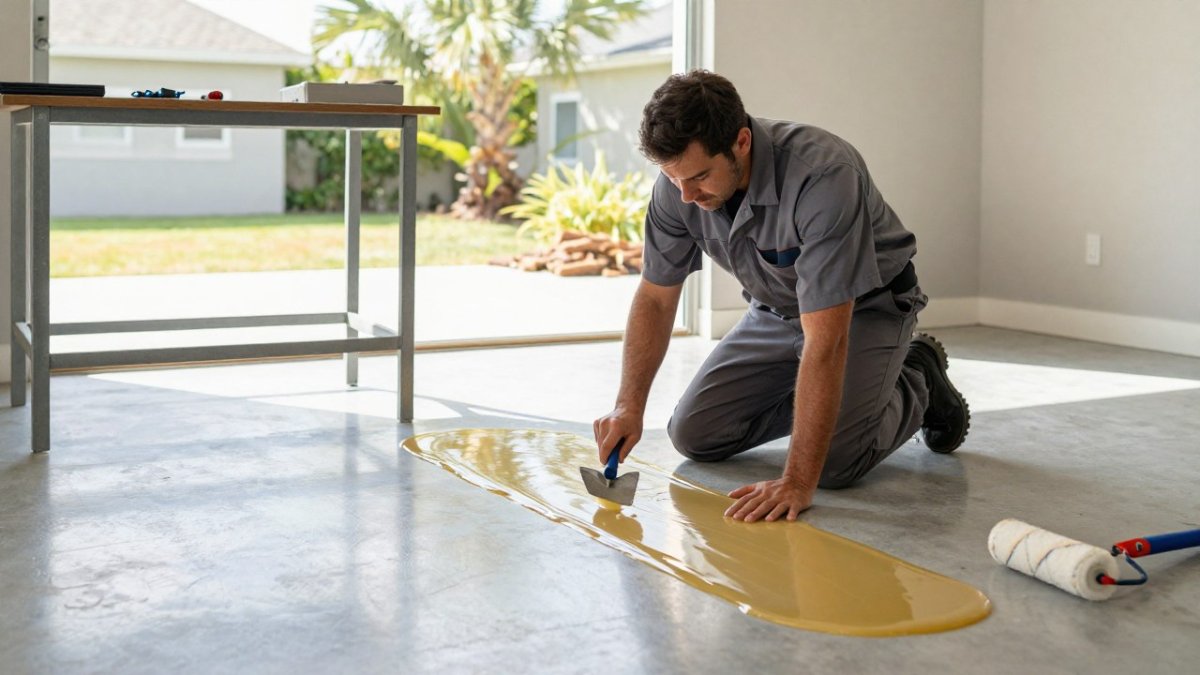
Epoxy garage floor coating is a two-part resin system applied over a prepared concrete slab, bonding into the surface to form a hard, seamless layer. That layer is what changes how the floor performs.
Below, we break down what those coatings actually do, where they fall short, and what drives the cost, so you can decide with clear eyes instead of a salesman's brochure.
The Benefits of Epoxy Garage Floor Coatings on Concrete
The core benefits of epoxy garage floor coatings on concrete come down to protection and cleanability. A properly installed coating seals the slab against spills, blocks dusting, and gives you a surface you can wipe down instead of scrub. Bare concrete is porous; it drinks oil, holds tire marks, and releases fine dust every time something drags across it. Epoxy closes that surface.
The list of practical gains is short and concrete:
- Sealed surface that resists oil, gas, and household chemicals
- No more concrete dust settling on stored items
- Easy cleaning with a push broom and a damp mop
- A uniform, finished look instead of patchy gray slab
- Better light reflection from a gloss or flake finish
Stain, Chemical and Oil Resistance
Oil resistance and chemical resistance are the headline performers. A garage sees drips from the car, spills from lawn equipment, and the occasional knocked-over paint can. On bare concrete those become permanent maps of every accident. On a cured epoxy coating they sit on top, giving you time to wipe them up.
What most guides miss is that resistance depends on the topcoat, not just the epoxy. A urethane topcoat adds chemical resistance and helps the floor hold up against hot-tire pickup, where warm tires lift softer coatings in summer heat.
Slip Resistance, Gloss and Decorative Flakes
Gloss and decorative flakes are where function meets appearance. A high-gloss finish brightens a dim garage, and decorative flakes hide dust and small imperfections between cleanings. Flake aggregate can also add texture for traction, which matters on a floor that gets wet from rain off the car.
Slip resistance is a real safety consideration, not a cosmetic one. Smooth gloss alone can be slick when wet. Broadcast flake or an anti-slip additive gives you grip without sacrificing the finish.
How Jupiter's Heat and Salt Air Test the Coating
Jupiter sits in one of the most demanding coating environments in the continental United States: high water tables, year-round humidity, intense UV, and salt-laden onshore air.
Moisture vapor transmission. Concrete is porous, and in coastal Palm Beach County the slab often sits above a high water table. Water vapor moves upward through the slab continuously. When that vapor reaches a coating with low permeability, it has nowhere to go.
Heat and dew point. Summer garage temperatures in Jupiter routinely push past 90°F, and a west-facing garage door can radiate heat onto the slab for hours. Epoxy cures exothermically, and a hot slab accelerates that reaction.
Salt air. Airborne chloride deposits settle on garage floors near the coast, especially in homes within a few miles of the ocean. Salt is hygroscopic, it pulls moisture from the air and holds it against the surface.
UV exposure. Standard epoxy can yellow under ultraviolet light, especially on light-colored floors in sun-exposed garages. Polyaspartic or aliphatic urethane topcoats resist yellowing better.
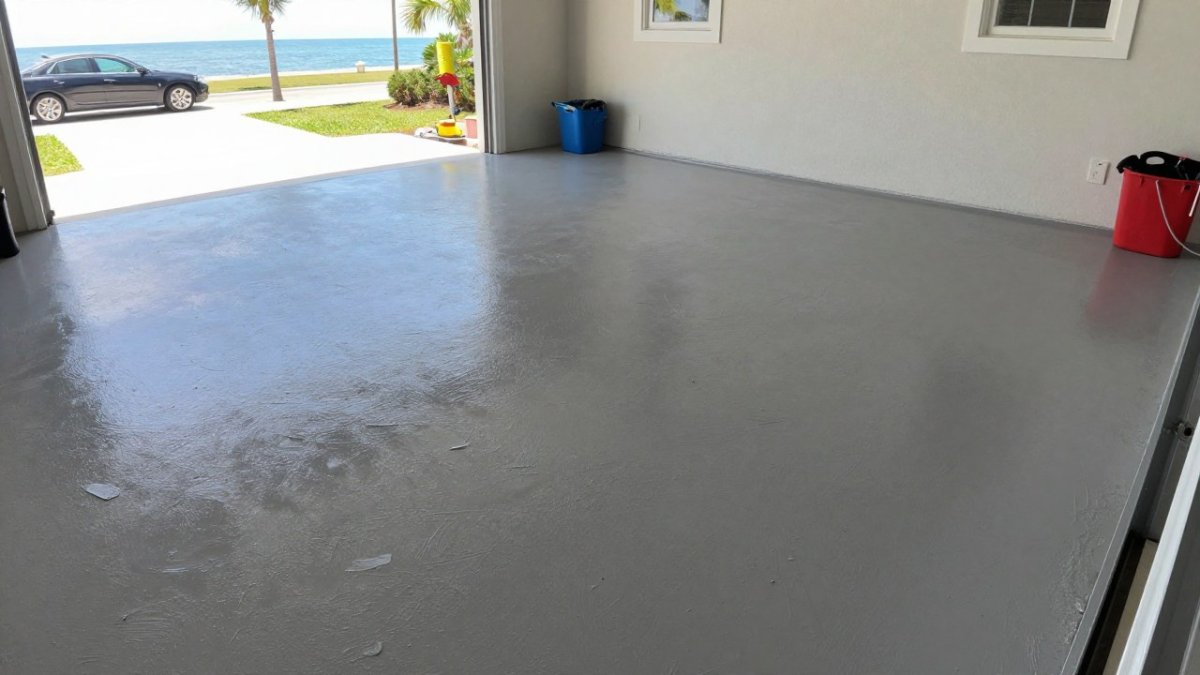
Rain and salt tracking. Wet tires can track rainwater and dissolved road salt onto a garage floor, and that moisture sits on the surface until it evaporates.
Skipping moisture testing because the slab looks and feels dry can lead to coating failure, since concrete can pass significant vapor while appearing completely dry at the surface.
Taken together, these forces mean the coating system, the primer, and the topcoat should be chosen for a coastal subtropical environment rather than a generic inland garage.
Pros and Cons of Epoxy Flooring in a Garage
Epoxy flooring is not the right answer for every garage slab. It works well when the concrete is sound and dry, and poorly when it is not.
Pros:
- Durable surface with strong abrasion resistance and impact resistance
- Seamless finish that is easy to clean and maintain
- Wide range of colors, gloss levels, and flake blends
- Adds a finished look that helps with home value at resale
Cons:
- Requires thorough surface preparation; shortcuts cause peeling
- Standard epoxy can yellow under UV exposure
- Cure time means the garage is out of use for a stretch
- Existing cracks and damage need concrete repair first
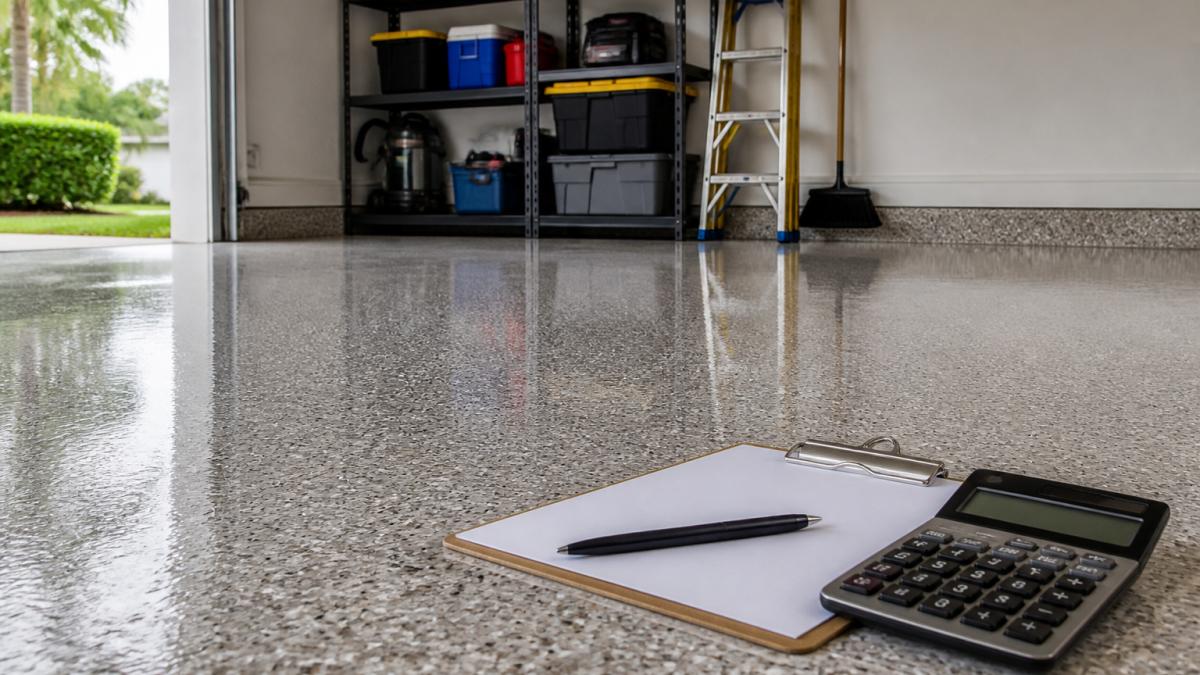
If you want to see how a finished floor looks in a real Jupiter home before committing, our completed epoxy floor projects show the range of finishes we install.
What Drives Epoxy Garage Floor Cost
Epoxy garage floor cost depends on square footage, slab condition, and the coating system chosen. A clean, dry, sound slab generally requires less work to coat than one that needs grinding, crack repair, and a moisture barrier.
Surface preparation is a major factor in cost. Diamond grinding, concrete repair, and a primer coat all add labor, and they are the steps that determine whether the coating bonds.
System choice matters too. A basic epoxy base coat with a clear topcoat sits at one end; a full flake system with a polyaspartic topcoat sits at the other. For real numbers on what you will actually pay, our guide to epoxy garage floor cost breaks down the ranges and what moves them.
Can I DIY Epoxy, or Should I Hire a Crew?
Can I DIY epoxy is a fair question, and the honest answer is: sometimes, but the failure rate is high. Epoxy is unforgiving. Moisture in the slab, poor surface preparation, or the wrong mixing ratio will show up as bubbling or peeling, often months after you thought the job was done.
A common mistake is skipping the moisture test because the floor looks dry. Concrete can look and feel dry while still passing vapor that destroys the bond. Another is under-grinding, which leaves a surface the coating cannot grip.
If you want a floor that holds up to vehicle traffic and Florida humidity, hiring a crew with proper surface preparation equipment is the safer path. If you are weighing local options, our roundup of the best epoxy garage floor installers in Jupiter, FL is a useful starting point for comparing approaches.
Epoxy vs. Polyaspartic and Other Garage Floor Coatings
Homeowners often treat "epoxy floor" as a single product, but the category covers several distinct chemistries with different strengths. The comparison below summarizes how these systems differ.
Epoxy. A two-part resin and hardener system, usually applied as a base coat and sometimes a build coat.
Polyaspartic. A faster-reacting resin that cures in hours rather than days and resists UV yellowing far better than standard epoxy. It can be applied in cooler temperatures and returns the garage to service much sooner.
Urethane topcoats. Aliphatic urethane is another UV-stable topcoat option, with strong chemical resistance and good hot-tire pickup resistance. It is often used over epoxy in commercial and high-traffic residential settings.
Concrete sealers. Acrylic and penetrating sealers are the lowest-cost option and offer light protection against moisture and staining, but they do not build a film, do not hide imperfections, and wear away faster under vehicle traffic.
Interlocking tiles and roll-out mats. These are easy to install and can be removed, but they trap moisture and debris underneath, do not seal the slab, and can shift under vehicle weight.
| Coating | Typical Cure Before Traffic | UV Stability | Relative Material Cost | Best For |
|---|---|---|---|---|
| Epoxy base | 3-7 days | Can yellow | Lowest | Build coat, shaded garages |
| Polyaspartic | Hours to 1 day | Excellent | Higher | Sun-exposed garages, fast turnaround |
| Aliphatic urethane topcoat | Fast | Excellent | Higher | Chemical and hot-tire resistance |
| Acrylic/penetrating sealer | Hours | Good | Lowest | Light protection, budget |
| Interlocking tile / mat | Immediate | N/A | Varies | Temporary or rental use |
Cure times vary with slab temperature, humidity, and product formulation, so the numbers above are ranges, not guarantees. In Jupiter's summer heat, cure windows shorten; in the cooler months they lengthen.
Watch out: comparing systems on material price alone misses the labor and preparation cost, which is often the larger share of the project.
For a coastal garage, an epoxy base with a polyaspartic or urethane topcoat is one combination that balances build, UV stability, and cost. The right answer depends on the slab's moisture condition, sun exposure, and how the garage is used.
Scheduling Your Garage Floor Assessment
The right coating starts with knowing your slab. Florence Painting Aloha's painting services in Jupiter, FL include epoxy garage floors, and a project starts with an assessment of what the concrete needs.
The process is transparent from consultation to delivery, and the business offers a satisfaction guarantee: if you are not completely satisfied, it will fix the work.
Ready to stop living with a stained, dusty slab? Schedule a bid to get started. Get started with Florence Painting Aloha and turn your garage floor into a surface you are glad to park on.
Frequently Asked Questions
What are the downsides of having an epoxy garage floor?
Epoxy needs a sound, dry concrete slab, so cracking or high moisture can cause peeling and bubbling if it is not addressed first. Standard epoxy can yellow under strong UV exposure, which matters on a garage with open sun. Cure time keeps the floor off-limits for several days, and hot-tire pickup can mark a poorly specified coating. Most of these risks shrink when the slab is tested, ground, and repaired before the primer goes down.
Is an epoxy garage floor worth it compared with leaving bare concrete?
Bare concrete dusts, stains and pits under tires and dropped tools. An epoxy garage floor seals the surface, so oil, road salt and spills wipe up instead of soaking in, and the slab is easier to sweep and rinse. It also improves appearance and can support resale appeal. Whether it pays off depends on slab condition and how long you plan to stay, so an on-site assessment is the honest starting point.
Can you apply an epoxy garage floor coating yourself?
You can, and the kits are widely sold, but the outcome hinges on preparation rather than the pour. DIY failures usually trace to skipped moisture testing, weak acid etching instead of diamond grinding, or applying coats outside the product's temperature window. If you can grind the slab, repair cracks, and keep the garage within the manufacturer's range for the full cure, DIY is viable. Otherwise a professional crew removes most of the failure risk.
How long does an epoxy garage floor coating last?
A properly prepped and installed epoxy system's lifespan depends on preparation, topcoat, and use, with wear often concentrated in parking spots and entry paths. Lifespan drops when the slab has unchecked moisture, when the topcoat lacks UV or abrasion protection, or when heavy impact chips the surface. Recoating a worn topcoat is far cheaper than starting over, which is why the base system and prep matter most.