 How-to
How Do You Remove Salt Buildup From Exterior Walls?
Last Updated: October 28, 2026
Quick Summary
Remove salt buildup by dry-brushing the loose salt with a stiff nylon brush, then washing the wall with diluted white vinegar for light deposits or a commercial masonry cleaner for heavy crust. Rinse with low pressure, keeping the wand at least 12 inches from the wall, and always test a small hidden patch first.
- Salt buildup is a white, chalky crust left when moisture carries dissolved salts to the surface and evaporates.
- Use a stiff nylon brush, never a wire brush, which can open cracks in the wall.
- Keep pressure washing low with a 25-degree or 40-degree fan tip and constant motion.
- Clean on a cool day so the solution does not dry before it works.
- Fix leaky gutters or sprinklers hitting the wall to stop salt buildup from returning.
Table of Contents
- Why Salt Buildup Appears on Exterior Walls and What It Signals
- What You'll Need to Remove Salt Buildup Safely
- Step 1: Dry-Brush Loose Salt and Check for Damage
- Step 2: How to Remove Efflorescence From Stucco With the Right Mix
- Step 3: Pressure Washing Stucco Safely Without Gouging the Surface
- Step 4: Pick the Best Cleaner for Salt Deposits on Exterior Walls
- Step 5: Remove Salt Residue Before Repainting Exterior Walls
- Common Mistakes That Let Salt Buildup Return
- Keep Your Coastal Walls Clean for Good
- Frequently Asked Questions
Why Salt Buildup Appears on Exterior Walls and What It Signals
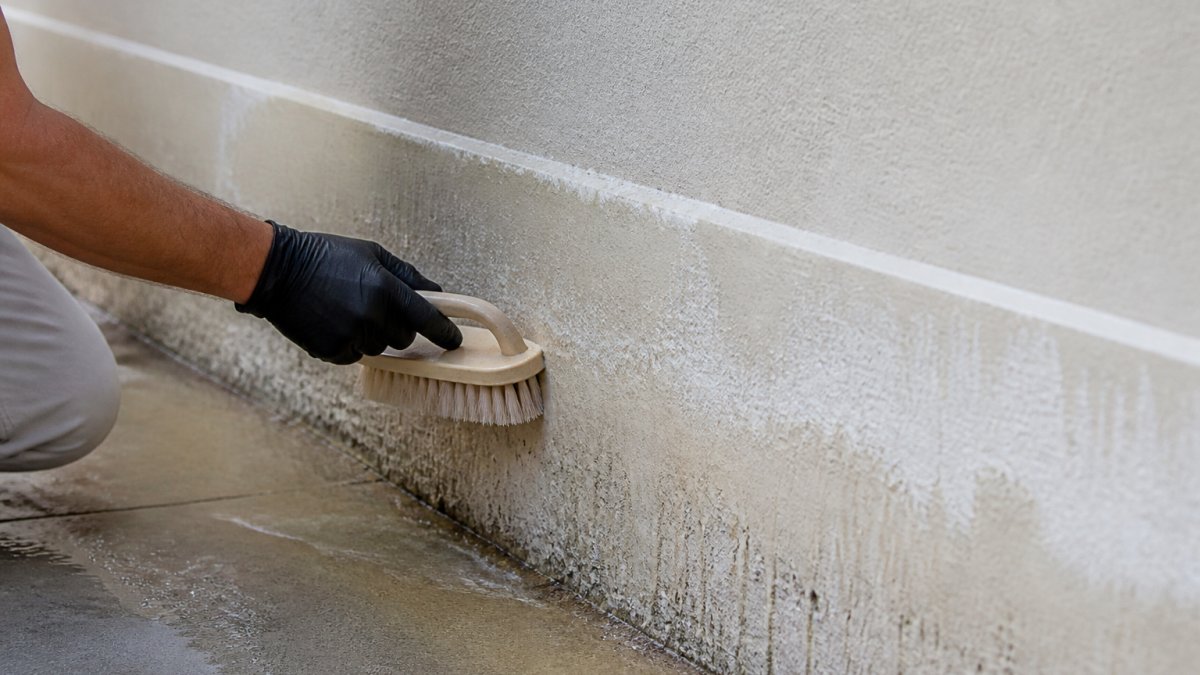
Salt buildup on exterior walls is a white, chalky crust that forms when moisture carries dissolved salts to the surface and the water evaporates, leaving the salt behind. This guide shows you how to remove salt buildup from exterior walls.
The white powder you see is a warning, not just a cosmetic flaw. It means water is moving through your wall. Sometimes the salt comes from sea spray landing on the surface. Sometimes it comes from inside the stucco or block itself. The U.S. General Services Administration guide on efflorescence describes this as a sign of moisture migration through masonry, and that distinction matters.
Two things cause the buildup:
- Surface salt from ocean spray and humid air settling on the wall
- Deep salt pulled from within the stucco as moisture moves outward
What You'll Need to Remove Salt Buildup Safely
Gather your tools before you start.
- A stiff nylon brush, not wire
- A garden hose with a spray nozzle
- A pump sprayer for cleaning solution
- White vinegar for light deposits
- A commercial masonry cleaner for heavy crust
- Rubber gloves, safety glasses, and old clothes
- Plastic sheeting to protect plants and windows
Step 1: Dry-Brush Loose Salt and Check for Damage
Start dry.
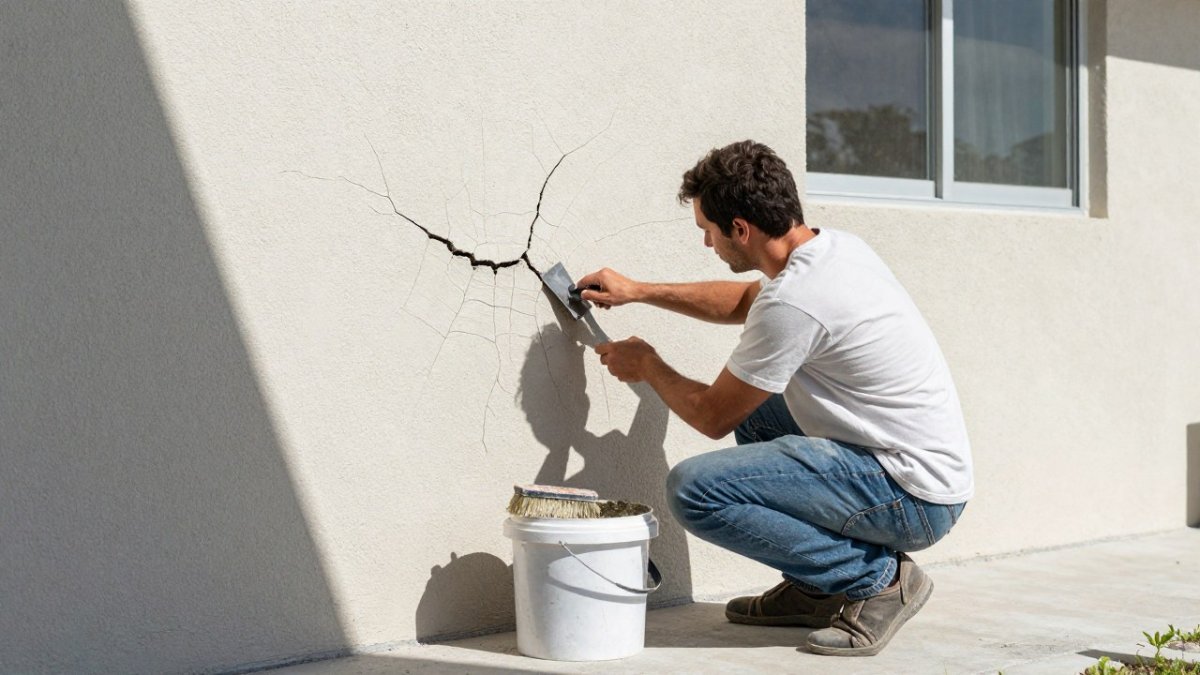
If you find soft spots or repeated cracking, you may be facing a repair rather than a cleaning. Our guide on stucco repair vs replacement for coastal homes walks through the warning signs and how to tell which one your wall needs.
Step 2: How to Remove Efflorescence From Stucco With the Right Mix
Always test a small hidden patch first. Wait for it to dry fully before you judge the result. Wet stucco hides problems.
Step 3: Pressure Washing Stucco Safely Without Gouging the Surface
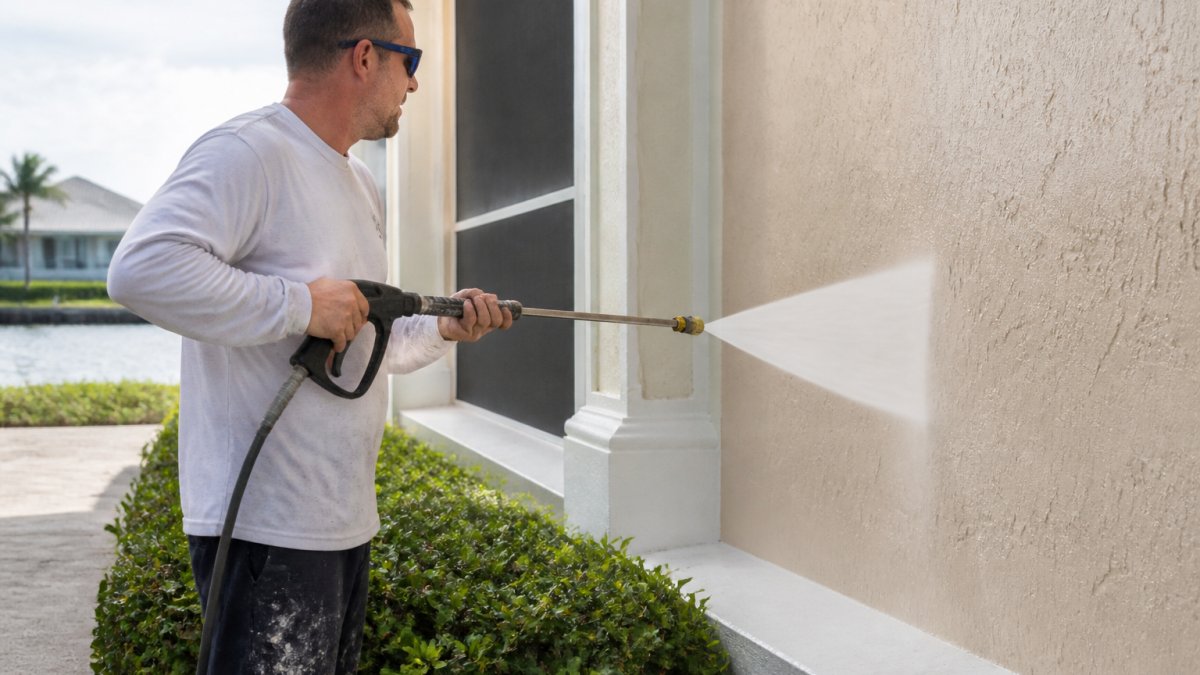
- A 25-degree or 40-degree fan tip
- Pressure kept low, just enough to rinse
- The wand at least 12 inches from the wall
- Constant motion, never holding still
Step 4: Pick the Best Cleaner for Salt Deposits on Exterior Walls
| Cleaner | Best For | Watch Out For |
|---|---|---|
| Diluted white vinegar | Light white fuzz | Weak on hard crust |
| Masonry efflorescence cleaner | Thick, stubborn crust | Follow label; can etch if left too long |
| Oxygen bleach mix | Organic staining with salt | Needs full rinse |
| Plain water rinse | Regular upkeep | Does not dissolve heavy salt |
Step 5: Remove Salt Residue Before Repainting Exterior Walls
If you would rather hand this to a crew, you can get an estimate.
Common Mistakes That Let Salt Buildup Return
Other repeat offenders:
- Cleaning on a hot, sunny day so the solution dries before it works
- Using a wire brush and opening cracks
- Ignoring a leaky gutter or sprinkler hitting the wall
- Never re-inspecting after the first rain
Keep Your Coastal Walls Clean for Good
At Florence Painting Aloha, we provide thorough power washing and surface preparation, plus stucco patch, match, and paint services. Our transparent process and satisfaction guarantee mean we will fix it if you are not completely satisfied.
Get started with Florence Painting Aloha.
Frequently Asked Questions
What is the white buildup on my exterior walls?
The white crust is usually efflorescence, a mix of salt and mineral deposits left behind as moisture moves through stucco or masonry and evaporates. In coastal areas, airborne salt spray adds to it. It is not mold, and it does not mean the wall is failing, but it does signal that moisture is moving through the surface. Rinse it off with a diluted vinegar solution, then plan a repaint with a breathable exterior coating to reduce how often it returns.
Can I use vinegar to remove salt buildup from exterior walls?
White vinegar mixed with water is a practical cleaner for light salt buildup on stucco and masonry. Try one part vinegar to three or four parts water, apply it with a pump sprayer, let it sit for a few minutes, then scrub gently with a soft brush and rinse. Vinegar is acidic, so do not let it pool on metal fixtures or plants. For heavier crusting, a commercial efflorescence remover may be needed, and a small test patch is always wise first.
Should I remove salt deposits before repainting?
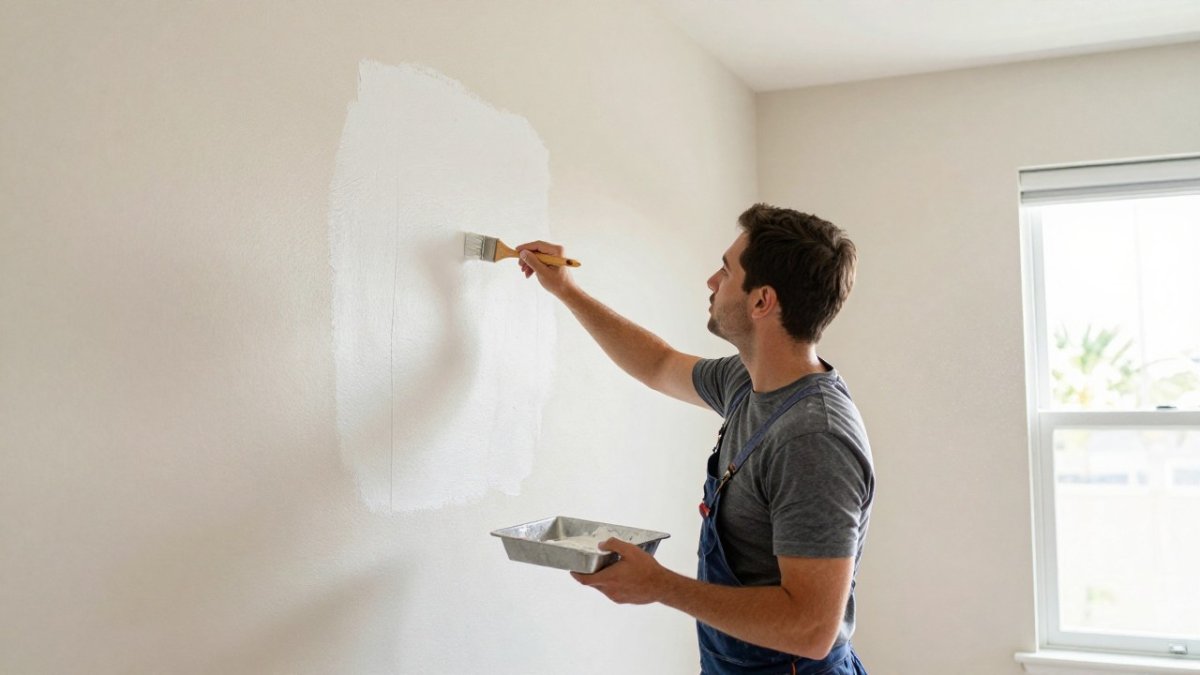
Yes. Paint will not bond to a salty, chalky surface, and trapped salt can push new paint off within a season. Before repainting, remove salt residue, rinse thoroughly, and let the wall dry completely. Then check for chalky residue with a wipe test. If the surface still feels gritty, clean it again. A breathable masonry primer followed by a quality exterior paint gives the new coating the best chance of holding up in coastal conditions.
How often should coastal homes be cleaned to remove salt spray?
Most coastal homes benefit from a rinse every three to six months, with a full wash once or twice a year. Walls that face the water or catch prevailing wind may need more frequent attention. Check for white crusting after storm season and rinse it early, before it hardens. Regular rinsing is far easier than removing heavy salt buildup later, and it helps paint and stucco last longer between repaints.