 Comparison
Kitchen Cabinet Refinishing vs Refacing for Older Cabinets
Last Updated: October 25, 2026
Quick Summary
Cabinet refinishing renews the existing surfaces of your boxes, doors, and drawer fronts with cleaning, sanding, priming, and a new paint or stain finish. Refacing instead replaces the doors and drawer fronts and covers the visible frames with laminate or wood veneer. Refinishing costs less, while refacing gives a near-custom look.
- Refinishing is roughly two-thirds the cost of refacing, per reported industry figures.
- Refacing runs about 70% to 80% of the cost of new cabinets.
- Most refinishing projects take several days to about a week.
- Refacing lead time is dominated by fabrication, which can run weeks.
- Replacement makes more sense when boxes are structurally failing or you want a new layout.
Table of Contents
- Cabinet Refinishing vs Refacing: What Each One Actually Changes
- Side-by-Side Comparison: Cost, Timeline, Durability, and Disruption
- What Kitchen Cabinet Refacing Cost Looks Like in Practice
- How Long Does Cabinet Refinishing Take Compared With Refacing?
- Pros and Cons of Cabinet Refacing You Should Weigh First
- Cabinet Condition Checklist: Can Your Boxes Be Reused?
- When to Replace Kitchen Cabinets Instead of Refinishing or Refacing
- Getting a Cabinet Refinishing or Refacing Bid for Your Kitchen
- Frequently Asked Questions
Cabinet Refinishing vs Refacing: What Each One Actually Changes
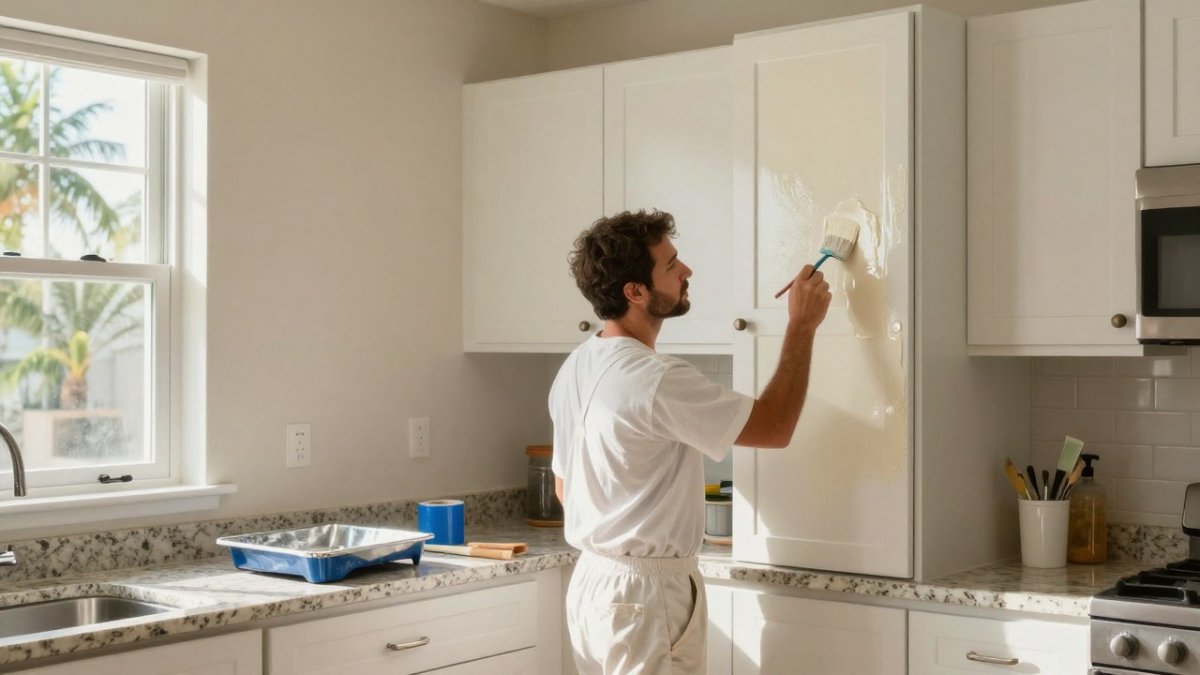
Kitchen cabinet refinishing is the process of renewing the existing surfaces of your cabinet boxes, doors, and drawer fronts through cleaning, sanding, priming, and applying a new paint or stain finish.
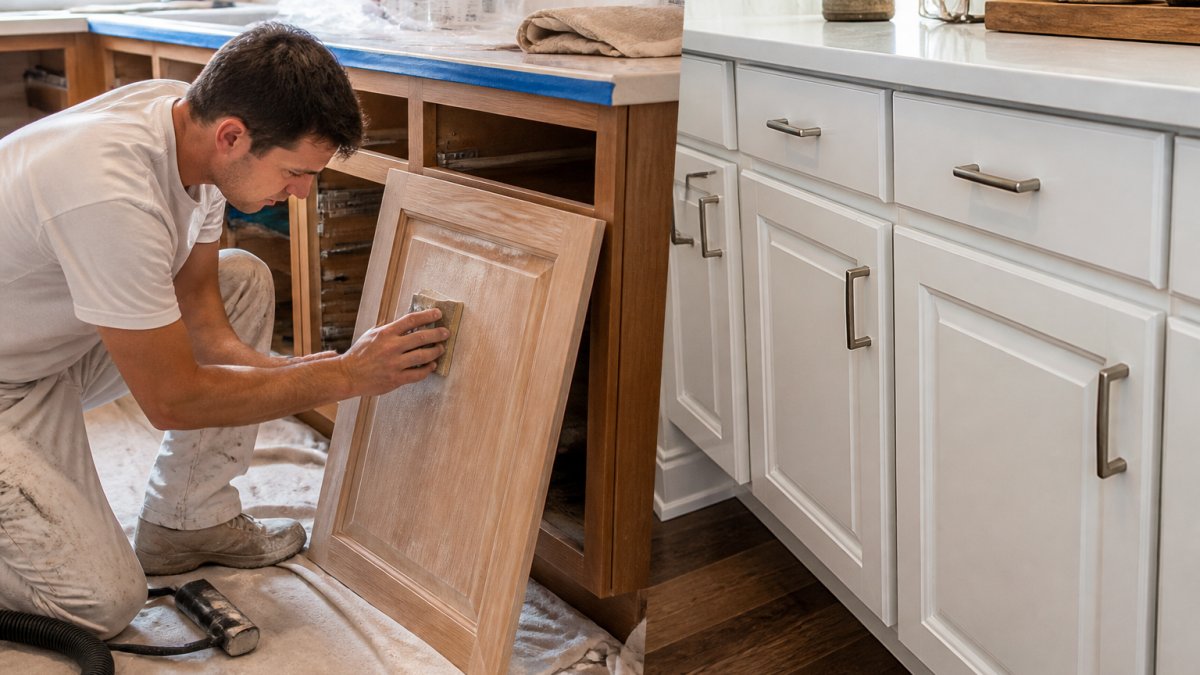
The confusion is understandable. Both approaches promise a new look without tearing out your kitchen. But they differ in scope, cost, timeline, and what happens to your existing cabinetry.
Refinishing and Repainting: Same Scope or Different?
Refinishing and repainting are often used interchangeably, and in most residential projects they describe the same scope. You can see the full range of cabinet painting options we offer.
The real difference is in the prep. If you want to explore color and finish direction, our guide to the 5 best cabinet paint colors for kitchens covers prep steps and cost factors.
Refacing and Redooring: Where the Line Sits
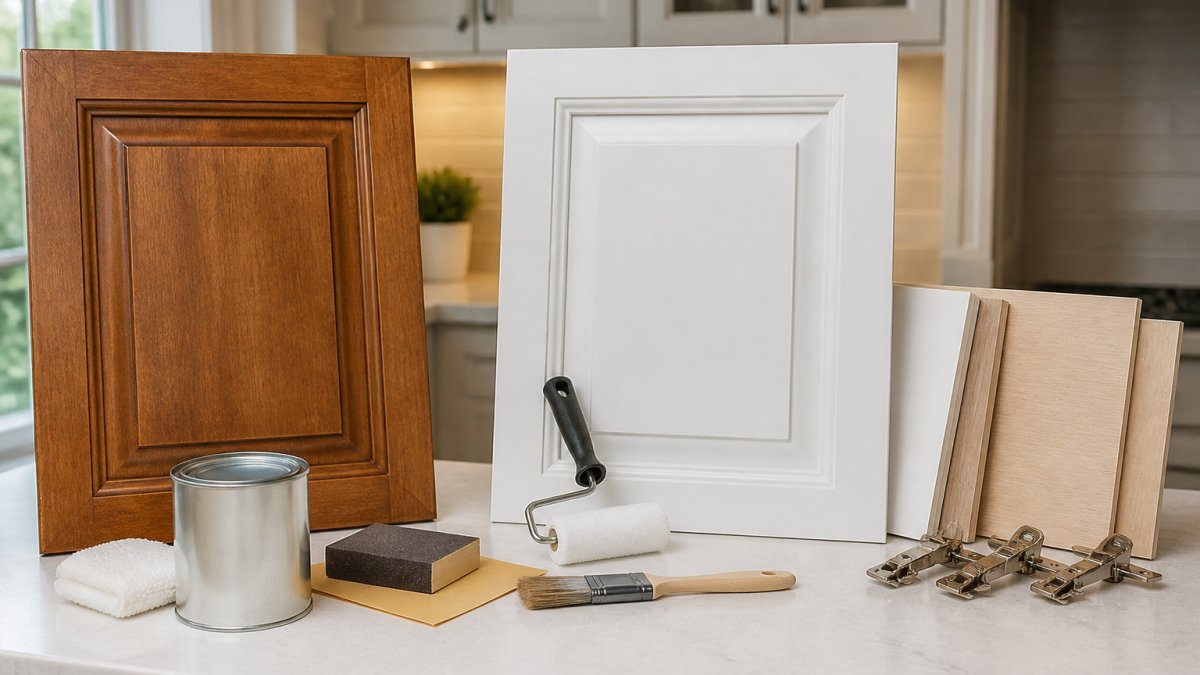
Redooring replaces only the cabinet doors and drawer fronts. Refacing goes further: it also covers the cabinet frames and box exteriors with veneer or laminate. Redooring is the lighter version of refacing, and it only works when the boxes and frames are in solid shape.
That distinction matters when you compare bids. A quote for redooring should not be priced like full refacing.
Side-by-Side Comparison: Cost, Timeline, Durability, and Disruption
The table below summarizes how kitchen cabinet refinishing vs refacing compare on the factors homeowners ask about most. The notes underneath explain what drives each factor, because the ranges only make sense once you know what moves them.
| Factor | Refinishing | Refacing |
|---|---|---|
| What changes | Finish and color on existing surfaces | New doors, drawer fronts, and frame veneer |
| Relative cost | Lower | Higher, often close to two-thirds more |
| Timeline | Usually faster | Longer, due to fabrication and installation |
| Kitchen disruption | Moderate | Moderate to high |
| Durability | Depends on prep and coating quality | Depends on veneer quality and installation |
| Best for | Solid boxes with worn or dated finish | Solid boxes with damaged or outdated doors |
What Actually Drives the Cost Difference
The gap between the two is not a single line item. Refacing adds three costs refinishing does not carry: new doors and drawer fronts, veneer or laminate for the frames, and the labor to fit and align all of it.
Within each option, the same variables move the number:
- Cabinet count and linear footage. Most bids are built per linear foot or per door/drawer front, so a 10-foot run and a 25-foot run land in very different places.
- Door style and material. A flat slab door and a raised-panel door cost different amounts to replace, and the same is true of veneer grades.
- Hardware. New hinges, soft-close drawer slides, and pulls are commonly added to refacing bids and can add a meaningful line to the total.
Reported industry figures put refinishing at roughly two-thirds the cost of refacing, and refacing at roughly 70% to 80% of the cost of new cabinets, according to The Cabinet Doctors' comparison of refinishing, refacing, and resurfacing.
Timeline: Where the Days Go
Refinishing time is dominated by dry and cure windows, not by installation.
Refacing time is dominated by fabrication. Doors and veneer are measured, ordered, built, and only then installed. The install itself is often quick; the lead time before it is not. Ask any contractor for the fabrication lead time separately from the install days, because that is where schedules slip.
Disruption: What Your Kitchen Looks Like Mid-Project
Refinishing keeps the doors on the boxes for most of the job, so drawers and cabinets stay usable between coats. Refacing removes doors and drawer fronts for a stretch, which means open shelving, dust, and a kitchen you will want to keep pets and kids out of. Neither is a full remodel, but refacing asks more of your routine.
Durability: What Determines How Long the Result Lasts
Neither option has a fixed lifespan. What determines longevity is the same for both: how well the substrate is prepared, what coating or veneer is used, and how the finished surface is cleaned and maintained. A refinish with rushed prep and a low-grade coating will fail sooner than a careful one; a reface with poorly adhered veneer will peel regardless of the door quality.
What Kitchen Cabinet Refacing Cost Looks Like in Practice
Kitchen cabinet refacing cost depends on cabinet count, material choice, and door style. Published estimates vary widely: one source reports an average refacing range of $4,000 to $9,500, while another cites roughly $15,000 for a project based on 27 linear feet with materials and installation included, per The Home Depot's cabinet refacing cost guide.
For painting, reported ranges run from about $1,500 to $4,000 total, or roughly $75 to $200 per linear foot, based on Kitchen Cabinet Guys' painting versus refacing breakdown.
We do not publish a flat price, because every kitchen differs. What we can promise is a transparent quote with no hidden costs once work begins.
How Long Does Cabinet Refinishing Take Compared With Refacing?
Most refinishing projects take several days to about a week, depending on cabinet count, dry times, and how much prep the surfaces need. Refacing generally takes longer, because doors and veneer must be measured, fabricated, and then installed.
The bigger variable is disruption. Refinishing keeps your existing doors in place, so your kitchen stays usable between coats. Refacing removes doors for a stretch, which means more downtime.
The Refinishing Sequence, Day by Day
A refinishing schedule is built around cure windows, not around how fast a painter can move a brush. A common pattern looks like this:
- Prep and masking (1-2 days). Empty the cabinets, remove hardware and doors where needed, degrease, sand, and mask the room.
- Priming (1 day plus dry time). A bonding primer goes on and must cure before sanding and topcoats.
- Finish coats (1-2 days plus dry time). Two coats are typical, each with its own recoat window.
- Reassembly and touch-up (1 day). Hardware goes back on, doors are rehung, and edges are touched up.
Water-based coatings dry faster than oil-based ones, which shortens the calendar but not the number of steps. Humid weather, heavy grease buildup, and ornate door profiles all stretch the schedule.
The Refacing Sequence, and Where the Wait Is
Refacing has a different shape. Measurement and templating come first, then fabrication of doors and veneer, then installation. The install itself is often a few days; the fabrication lead time before it can run weeks depending on the door style and material. When you compare bids, ask each contractor to break out fabrication lead time from install days, that is the number that decides whether the project fits your calendar.
Planning Around the Disruption
A few practical moves make either project easier to live through:
- Clear the cabinets before day one. Every item in the work zone has to come out anyway; doing it early saves a day.
- Plan meals and dishes for the downtime. Refacing removes doors for a stretch, so plan for open shelving and takeout during install.
- Keep pets and kids out of the work zone. Sanding dust and wet coatings are the two things you do not want tracked through the house.
Pros and Cons of Cabinet Refacing You Should Weigh First
The pros and cons of cabinet refacing come down to what you gain versus what you spend.
Pros:
- New doors and veneer give a near-custom look
- Keeps your existing cabinet boxes and layout
- Less waste than full replacement
Cons:
- Higher cost than refinishing
- Requires boxes and frames in good structural condition
- Veneer can peel if installation or substrate prep is poor
If you want to see how finished cabinet work looks before deciding, browse our completed painting projects.
Best for: homeowners with damaged or dated doors and a healthy budget. Skip if: your boxes are solid and your doors just need a color change.
Cabinet Condition Checklist: Can Your Boxes Be Reused?
Before choosing either path, assess the boxes. Reuse is possible when the structure is sound. Run through this checklist:
- No soft spots, swelling, or water damage in the box or frame
- Doors and drawers open, close, and align without sagging
- Hinges and hardware can be tightened or replaced
If most boxes pass, refinishing or refacing is on the table. If several fail, replacement deserves a closer look.
When to Replace Kitchen Cabinets Instead of Refinishing or Refacing
Replacement makes more sense than refinishing or refacing when the boxes are structurally failing, when you want a different layout, or when water damage has compromised the frames. Refinishing cannot fix a sagging box or a bad layout.
If replacement or a larger renovation is coming, our guide to hiring one contractor for interior renovations walks through vetting, comparing bids, and spotting red flags.
Getting a Cabinet Refinishing or Refacing Bid for Your Kitchen
A useful bid starts with an in-person assessment, not a phone estimate. Ask each contractor to specify surface preparation steps, coating products, timeline, and what happens if they find damage mid-project.
When you are ready, schedule a bid from our team and we will walk your kitchen with you, explain what your boxes can support, and put the scope in writing.
Frequently Asked Questions
Which is cheaper, refacing or painting kitchen cabinets?
Painting or refinishing costs less than refacing in most reported comparisons. One cabinet company reports painting at $1,500 to $4,000 total, or roughly $75 to $200 per linear foot, while refacing runs $4,000 to $9,000, or about $200 to $450 per linear foot. Another source puts refinishing at about two-thirds the cost of refacing. Your actual cabinet refinishing price depends on cabinet count, door style, and surface condition, so get a written bid rather than relying on averages.
What is the difference between refinishing and refacing kitchen cabinets?
Refinishing keeps your existing doors and drawer fronts and changes their surface through cleaning, sanding, priming, and a new paint or stain finish. Refacing keeps the cabinet boxes but replaces the doors, drawer fronts, and veneer on the visible frames. Refinishing changes color and sheen; refacing changes the door style and material as well. Both reuse the existing cabinetry, which is why they cost less and create less waste than replacement.
How long does cabinet refinishing take compared with refacing?
Refinishing usually runs several days to about a week for an average kitchen, largely because of dry time between prep, primer, and finish coats. Refacing can take one to three days on site once the new doors and veneer arrive, but ordering materials can add weeks before work starts. Ask each contractor for a start date and a completion date, not just a duration, since material lead times often decide the real timeline.
Can you reface cabinets that are damaged or warped?
Warped doors and drawer fronts are not a problem for refacing because they get replaced. The cabinet boxes and frames are what matter. If the boxes are solid and square, refacing works. If the frames are swollen from moisture, the hinges no longer hold, or the boxes are out of square, new veneer will not fix the underlying problem and replacement becomes the better call. A contractor should inspect the boxes before quoting.
When should you replace kitchen cabinets instead of refinishing or refacing them?
Replacement makes sense when the layout no longer works, the boxes have water damage or structural failure, or you want a different footprint. Refacing costs about 70% to 80% of new cabinet installation according to one source, so the savings shrink as the scope grows. If you are moving walls, adding cabinets, or fixing sagging boxes, replacement is the honest answer. If the boxes are sound and the layout works, refinishing or refacing delivers the new look for less.
Your cabinets are either a refinishing candidate or a refacing one, and the difference is worth thousands. At Florence Painting Aloha, we include thorough surface preparation, a transparent process from consultation to delivery, and a satisfaction guarantee: if you are not completely satisfied, we will fix it. Get started with Florence Painting Aloha and schedule a bid for a finish that holds up.