 How-to
How to Keep Stucco Repair and Power Washing on Schedule
Last Updated: October 26, 2026
Quick Summary
Keep stucco repair and power washing on schedule by washing first, inspecting within 24 hours, patching third, and painting last, with a written cure window built into the calendar. Treat the earliest paint date as a hard gate, not a suggestion, and move the paint date rather than the cure when time is tight.
- Washing first reveals cracks hidden under dirt and chalk, so it belongs at the front of the project.
- A targeted stucco patch typically spans several days, governed by cure time more than labor time.
- Painting a patch that still feels cool to the touch traps moisture and guarantees a callback.
- Most products call for surface temperatures above roughly 50°F and below about 90°F.
- A simple three-column log of task, promised date, and actual date spots a slipping schedule early.
Table of Contents
- Why Exterior Repair Projects Slip Past Their Completion Date
- How Long Does Stucco Repair Take From Patch to Paint
- Power Washing Before Exterior Painting: The Step That Sets the Clock
- A Step-by-Step Homeowner Plan for Coordinating Stucco Patching and Washing
- Weather, Curing, and Readiness Checkpoints That Protect the Schedule
- Questions to Ask an Exterior Painting Contractor Before You Sign
- What a Stucco Repair Warranty Should Actually Cover
- Scheduling Your Stucco Patch and Power Wash Bid
- Frequently Asked Questions
Why Exterior Repair Projects Slip Past Their Completion Date
A stucco repair project rarely runs late because of the trowel work. It runs late because the schedule was never built around dry times, weather windows, and the order of operations.
The most common delays we encounter:
- Washing after patching. Water forced into fresh patch material ruins the bond and forces a redo.
- Painting before the patch cures. Moisture trapped under paint blisters within weeks.
- One-trade scheduling. The stucco contractor, the washer, and the painter each book separately, and nobody owns the handoffs.
The fix is sequencing, not speed: treat stucco repair as a chain of dependent steps, each with its own readiness checkpoint. For help deciding whether a damaged area calls for a patch or a full replacement, see stucco repair vs replacement for coastal homes.
How Long Does Stucco Repair Take From Patch to Paint
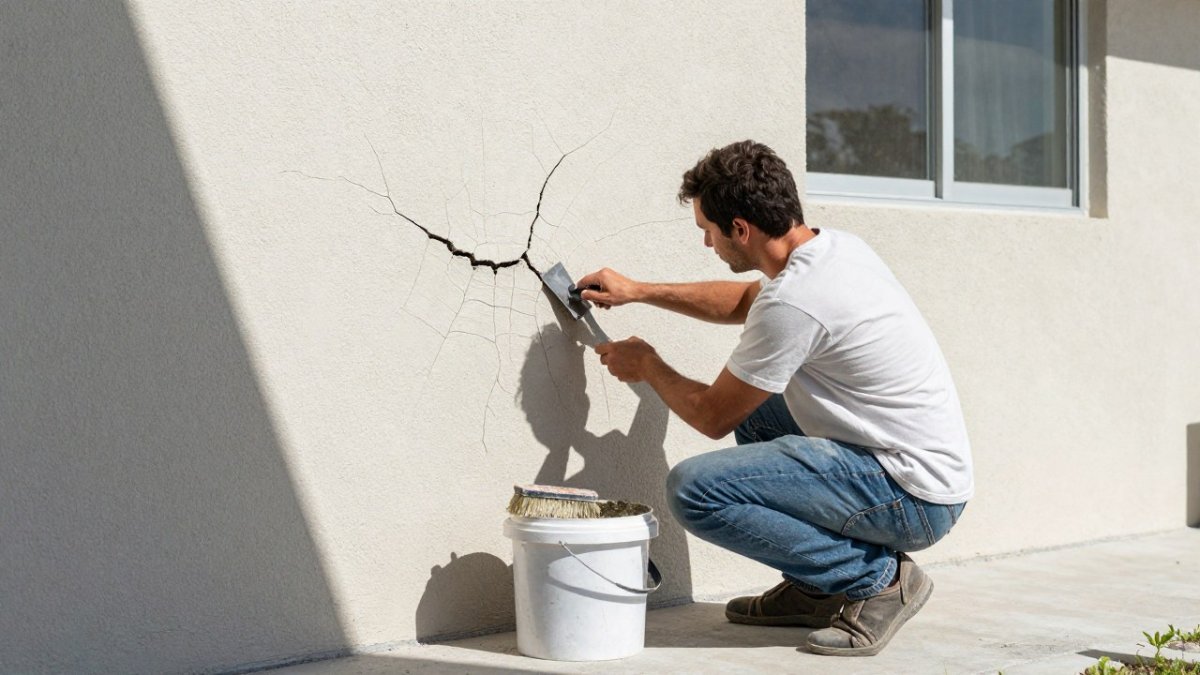
Most homeowners want one number. You can review the full range of painting services in Jupiter, FL, including stucco repair and pressure washing, to gauge the scope of your project. The honest answer: a targeted stucco patch typically spans several days from prep to final coat, governed by cure time more than labor time. Hairline cracks go quickly; larger areas with moisture intrusion behind the sheathing take longer because the wall must dry first.
Cure and Dry Times You Have to Build In
Patch material needs to set and lose moisture before paint goes over it. Plan on the patch reaching a uniform, matte appearance before finishing, and add time in humid coastal conditions. Build these checkpoints into the schedule:
| Phase | Typical Window | Readiness Check |
|---|---|---|
| Crack prep and cleaning | 1 day | Loose material removed, edges sound |
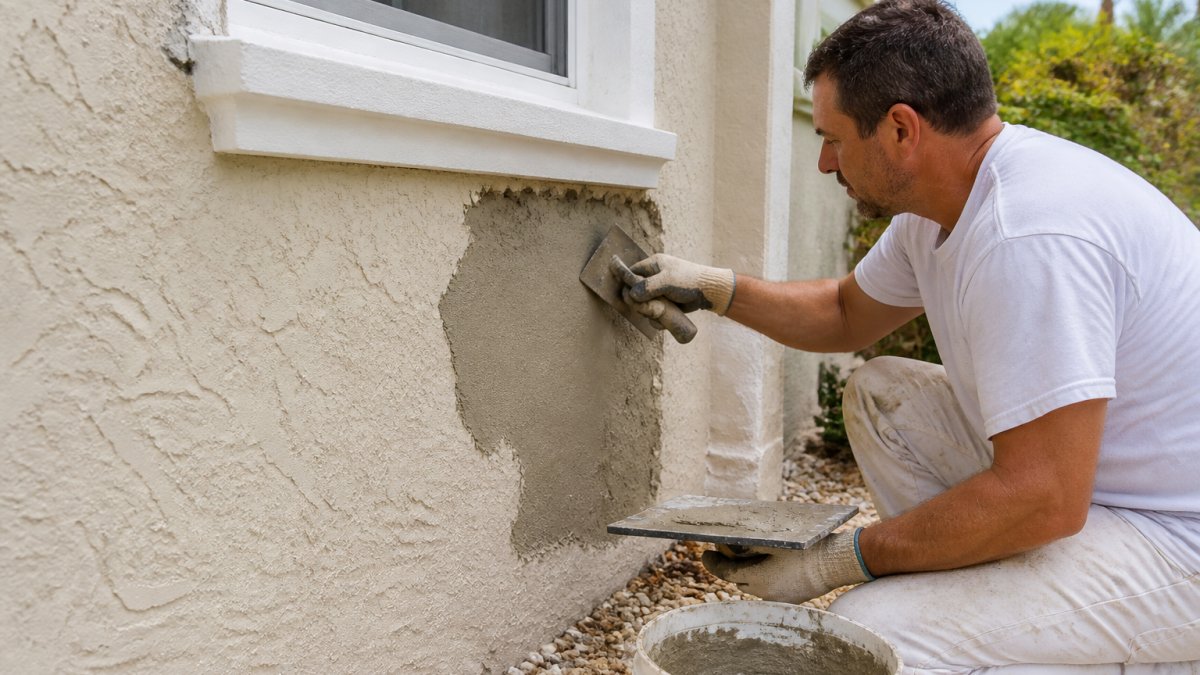
| Patch application | 1 day | Patch flush, no shrinkage gaps |
| Cure and dry | Multiple days | Uniform color, no cool or damp spots |
| Texture and color match | 1 day | Blend invisible under raking light |
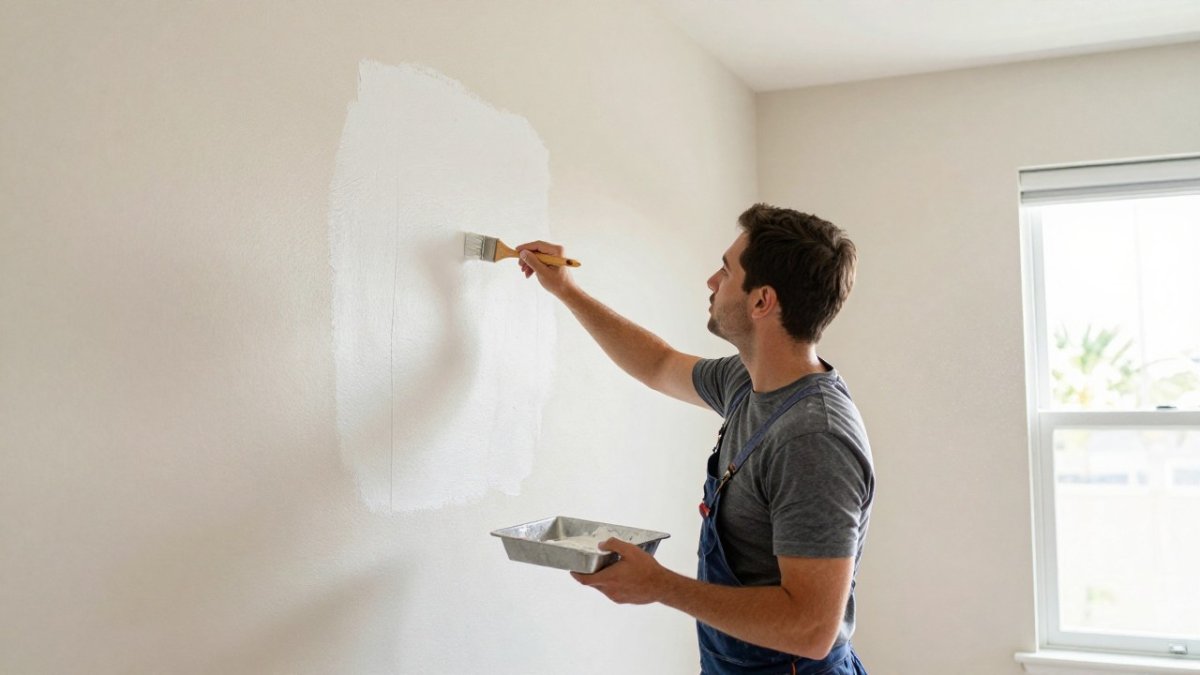
| Prime and paint | 1-2 days | Patch fully cured, weather clear |
Watch out: painting a patch that still feels cool to the touch traps moisture and guarantees a callback. If the schedule is tight, move the paint date, not the cure.
Power Washing Before Exterior Painting: The Step That Sets the Clock
Power washing before exterior painting decides whether the rest of the schedule holds. It removes salt film, chalky oxidation, and mildew so patch material and paint can bond.
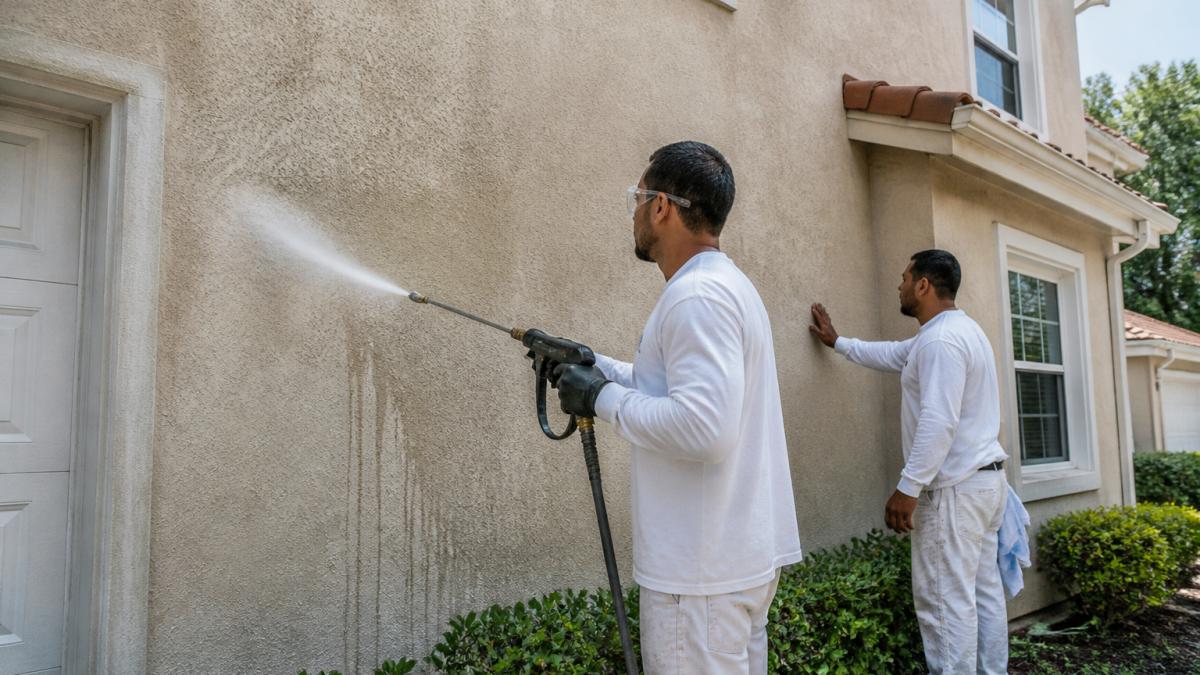
The correct sequence is wash first, inspect second, patch third, paint last. For washing schedules and coatings that protect siding from salt air, follow this step by step guide to preventing salt corrosion on siding.
Washing Without Forcing Water Into Cracked Stucco
Pressure is the variable most homeowners underestimate. High pressure aimed at a hairline crack drives water behind the finish and into the sheathing, creating moisture damage where none existed. Lower the pressure, keep the nozzle moving, and angle the spray downward so water runs off rather than in.
- Test pressure on an inconspicuous area first.
- Keep the wand moving; never hold it on one spot.
- Avoid direct spray into open cracks and penetrations.
A Step-by-Step Homeowner Plan for Coordinating Stucco Patching and Washing
Coordinating multiple exterior repairs comes down to one owner, one calendar, and one written scope. Most schedule failures happen before a trowel touches the wall, a verbal agreement, an unrecorded cure window, or an unowned handoff between washer and patcher. The plan below turns the project into a tracked sequence with named milestones.
Phase 1: Scope and Schedule (Before Any Work Starts)
- Walk the exterior and photograph every crack, flake, stain, and chalky patch. Date the photos; they become your baseline in a dispute.
- Get a written scope listing washing, patching, texture matching, priming, and painting as separate line items with quantities (linear feet of cracks, square feet of patch).
- Require a start date, a finish date, and the cure window in writing. The cure window is the most useful line in the contract because it tells you when paint can legally begin.
- Confirm who owns each handoff. If the washer and the stucco contractor are different companies, name the person responsible for inspecting after washing and releasing the patch crew.
- Ask how change orders are priced and approved. A patch that grows from a hairline crack to a softball-sized void is a scope change, not a surprise, get the per-square-foot rate in writing up front.
Phase 2: Wash, Inspect, and Lock the Patch List
- Schedule washing first, on a day with a dry forecast behind it. Washing removes salt film, chalky oxidation, and mildew, and reveals cracks that were invisible under dirt.
- Inspect the wall within 24 hours of washing, while the surface is clean and dry. Photograph every newly revealed crack and add it to the patch list before material is ordered.
- Get written confirmation of the final patch list and the revised finish date if the list grew. This is your first milestone check: if the patch list changed and the date did not, ask why.
Phase 3: Patch, Cure, and Finish
- Apply patches and record the cure start date and earliest paint date in writing. Treat the earliest paint date as a hard gate, not a suggestion.
- Match texture and color, then check the blend in raking light, low-angle sunlight that reveals ridges and color drift a straight-on view hides.
- Prime and paint only after the cure checkpoint passes. If the patch still feels cool to the touch or shows damp spots, the gate has failed and the paint date moves.
Phase 4: Walkthrough and Sign-Off
- Do a final walkthrough in daylight and log every punch-list item with a photo and a fix-by date.
- Get a written completion sign-off stating the finish date, warranty term, and what triggers a callback. Sign-off closes the project; without it, the schedule has no end point.
Tracking Progress Without Micromanaging
A simple three-column log, task, promised date, actual date, spots a slipping schedule early. Update it at each milestone: scope signed, wash complete, patch list locked, cure gate passed, paint complete, sign-off. If two consecutive milestones slip, ask for a revised finish date in writing rather than a verbal "we're close." Contractors who run tight schedules answer easily; those who resist have told you something useful.
That written cure window and milestone log are the two lines that keep a patch-and-wash project on schedule. Everything else is execution.
Weather, Curing, and Readiness Checkpoints That Protect the Schedule
Weather is the variable no contractor controls, but every good schedule anticipates it. The difference between a project that absorbs a rain day and one that loses a week is whether weather gates and cure dependencies were built in. Below are the checkpoints we use to decide whether the next task can start.
Temperature and Moisture Gates
Stucco patch material and exterior paint both have application windows. Most products call for surface temperatures above roughly 50°F and below about 90°F, and the wall temperature, not the air, is what matters. A wall in direct summer sun can run well above the air reading; a shaded wall can stay below it. Check the surface, not the forecast.
- Cold walls: Patch material that sets too slowly stays soft and traps moisture. If the wall is cold to the touch, delay the patch.
- Hot, sunny walls: Fast drying causes shrinkage cracks and lap marks. Work in shade or early in the day.
- High humidity: Cure times stretch. A patch that would be ready in a day inland may need an extra day near the water.
Cure-Time Dependencies Between Tasks
Each task in the sequence depends on the one before it being genuinely finished, not just dry to the eye. Build these dependencies into the calendar:
| Dependency | What Must Be True Before the Next Task |
|---|---|
| Wash → Inspect | Wall surface dry, no standing water in cracks |
| Inspect → Patch | Patch list locked, material on site |
| Patch → Texture | Patch flush, no shrinkage gaps, uniform color |
| Texture → Prime | Texture cured, blend checked in raking light |
| Prime → Paint | Primer dry per label, weather clear for the day |
A common pattern: a homeowner books paint for the day after patching because the calendar looked open. The patch may look dry on the surface while holding moisture underneath. Painting over it traps that moisture and blisters within weeks, a callback that costs more time than the original wait.
Readiness Checkpoints That Keep a Project Honest
- Dry forecast ahead: Washing needs a clear window with dry days following, not a single clear morning.
- Patch cure confirmed: Uniform color, no cool or damp spots, no shrinkage gaps.
- Surface temperature in range: Check the wall, not the air, and avoid painting in direct sun or on a cold wall.
What to Do When Weather Pushes the Schedule
A weather delay is not a crisis if the contract anticipated it. Ask for a revised finish date in writing the same day, and confirm which tasks move and which stay. Washing that slips a day usually pushes patching and painting by the same day; a failed cure gate can push only the paint. Knowing which is which keeps the rest of the calendar intact.
Questions to Ask an Exterior Painting Contractor Before You Sign
The right questions separate a scheduled project from an open-ended one. Ask for a written scope, a sequence, and a cure window before you sign.
- Who owns the schedule when washing, patching, and painting are separate trades?
- What cure time do you build in before paint, and is it in writing?
- How do you match texture and color on a patch, and will you show me a sample?
Ask to see completed exterior repaint work, not just photos of interiors. You can browse our work to see completed exterior repaints and other projects across South Florida.
What a Stucco Repair Warranty Should Actually Cover
A stucco repair warranty should cover workmanship on the patch itself: adhesion, cracking, and texture failure under normal conditions. It should state a term, what triggers a callback, and who pays for access and materials.
What most warranties miss is the boundary between workmanship and conditions. Salt air, hurricane-driven rain, and structural movement are usually excluded, which is reasonable.
Our own commitment is simple: if you are not completely satisfied, we fix it.
Scheduling Your Stucco Patch and Power Wash Bid
The best time to lock a schedule is before hurricane season and before listing a home. A bid that includes washing, patching, texture matching, and painting in one sequence removes the handoff problem.
At Florence Painting Aloha, we include thorough power washing and surface preparation in every exterior project, handle stucco patch, match, and paint as one scope, and give you a written sequence with cure windows built in. When you are ready to put dates on paper, request a free estimate and we will walk the exterior with you.
Frequently Asked Questions
How long does stucco patching take to dry before painting?
Most stucco patch material needs 24 to 72 hours before it is ready for paint, and thicker patches take longer than hairline fills. The patch should be firm, uniformly colored, and dry to the touch across its full depth. Painting too early traps moisture under the paint film, which is one reason repaired cracks reopen. Ask your contractor how they test readiness, and plan the paint day after that checkpoint rather than on the same visit as the patch.
Can a handyman handle stucco repair, or do I need a specialist?
Small hairline cracks and minor flaking are within reach for an experienced handyman. Larger areas, cracks that return after previous repairs, or any spot with soft, crumbly material usually point to moisture behind the stucco and call for a plasterer or stucco contractor. Those cases often involve the sheathing and substrate, not just the surface coat. Ask anyone bidding the job how they will confirm the wall is sound before patching.
How long should homeowners allow for power washing and exterior painting?
Power washing a typical single-family exterior takes a few hours to a full day depending on size and how much surface preparation is needed. Paint then needs the wall to be fully dry, which usually means waiting at least a day after washing. Add stucco patching and its cure time and a realistic window is several days to a couple of weeks. Build weather days into that estimate, since rain resets the drying clock.
What should a stucco repair warranty cover?
A workmanship warranty should state how long it runs, what it covers, and what voids it. Look for coverage on cracks or separation returning at the repaired area, and clarity on whether materials are covered separately by the manufacturer. Get the term in writing on the proposal, along with the process for filing a claim. A warranty that only covers the paint film, not the patch beneath it, will not help if the crack comes back.
Exterior repair schedules fail on the calendar, not on the trowel. If you want a stucco patch and power wash project with a written sequence, built-in cure windows, and one team accountable for the handoffs, Florence Painting Aloha can help. Get started with Florence Painting Aloha and schedule a bid that puts your completion date in writing.